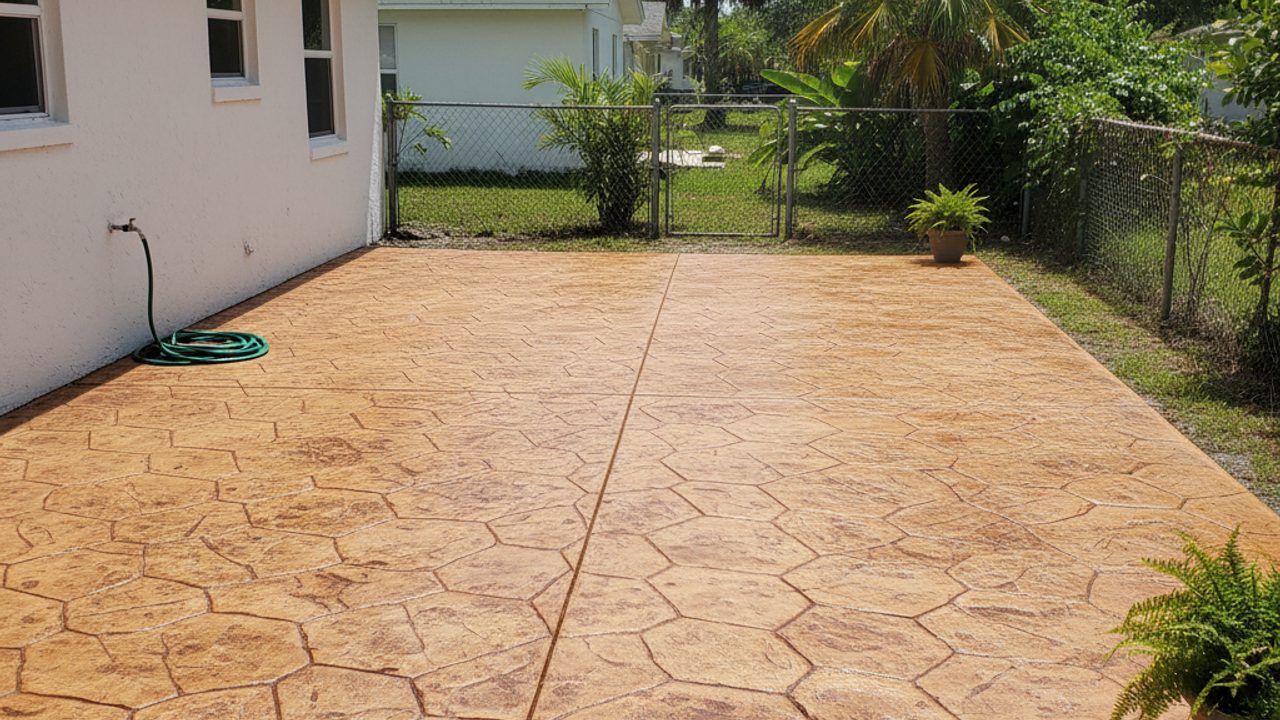
Most homeowners get one or two quotes, pick the lower number, and find out later what that number left out. Concrete is unforgiving that way. Once it's poured and cured, fixing a mistake means breaking it out and starting over, not patching a corner. Here's what actually separates a contractor worth hiring from one you'll be calling back in two years.
The ground here isn't like the ground inland
New Smyrna Beach sits on sandy coastal soil, and depending on where your lot is, the water table can be close to the surface, especially near the Indian River side or anything close to Callalisa Creek. Sand drains fast, which is actually good for concrete work compared to the clay soils you get further inland in Florida. But loose sand needs to be compacted properly before anything gets poured on it, usually to around 95% density, or you'll get settling later, and settling shows up as cracks or a slab that's pulled away from the house. Ask whether the crew compacts the base and how. If the answer is vague, that's a problem.
Older streets in Coronado or around Flagler Avenue often have fill dirt and old debris from decades of building and rebuilding close to the water, sometimes shell, sometimes construction scraps from the 60s and 70s. A contractor who's worked this area knows to dig test spots before they quote, not after they've already poured a truck.
Hurricane season changes the schedule
June through November is storm season on this coast, and a good contractor plans pours around it instead of hoping for the best. Concrete needs at least a few hours of dry weather to set up before rain can wash out the surface or leave it pitted. Afternoon thunderstorms are normal here in summer, so a lot of experienced crews pour early morning to get ahead of them. If someone's willing to pour at 2pm in August with a storm on the radar, that tells you something about how they run a job, not just this one.
Humidity matters too. Concrete cures through a chemical reaction, not by drying out, but high heat speeds that reaction up and can cause surface cracking if the slab isn't kept damp the first few days. In our summers, that means wet curing or a curing compound, not just walking away after the finish work.
What a real quote should include
A quote that just says "driveway, 500 square feet, $X" is missing almost everything that actually determines how the job holds up.
- Slab thickness. Four inches is standard for driveways and patios. Anywhere a vehicle heavier than a car will sit, like a boat trailer, you want thicker or reinforced with that in mind.
- Reinforcement. Wire mesh is common and cheap, but rebar holds its position better during the pour and gives more strength where soil isn't perfectly uniform, which matters on sandy lots. Near the water, salt air corrodes exposed or shallow rebar faster, so cover depth matters more here than inland.
- Control joints. These get cut roughly every 8 to 10 feet, and within 24 to 48 hours of the pour, before the concrete decides on its own where it wants to crack.
- Base prep. What's under the slab and how it's compacted.
- Cure time before you can drive on it. Usually 5 to 7 days for foot traffic to be fine, closer to a full 28 days before it's carrying real vehicle weight regularly.
If a written quote skips these, ask directly. A contractor who does this work for a living can answer without hesitating.
Permits and inspections aren't optional here
Volusia County and the City of New Smyrna Beach both require permits for slab work tied to structures, driveway aprons that meet the right-of-way, and most pool decks. Permitted work gets inspected, usually a footing or base inspection before the pour and sometimes a final once it's done. A contractor who tells you permits aren't necessary, or offers to skip them to save time, is offering to save themselves paperwork at your expense. If something goes wrong later, unpermitted work can complicate insurance claims and resale. If you're near a canal or in a flood zone, setback and elevation rules can also affect where a slab or pool deck can go, and a legitimate contractor will flag that before pouring, not after.
What to walk away from
A few things that should end the conversation:
- No license number offered, or reluctance to show proof of insurance. Florida requires licensing for concrete work of this scale, and you want a copy for your own file.
- A quote with no mention of thickness, reinforcement, or base prep, just a total price.
- Pressure to pay the full amount upfront. A deposit is normal. The whole job in cash before a shovel hits dirt is not.
- No mention of expansion joints where new concrete meets your house, garage slab, or existing walkway. Without them, the new pour cracks against the fixed structure as it moves seasonally.
- Nobody willing to talk about how they'll handle a rain delay. Everybody who works outdoors here deals with it. Someone who hasn't thought about it hasn't done many jobs.
Neighborhood age changes what's involved
Newer subdivisions like Venetian Bay or Sugar Mill tend to have consistent, engineered fill and clearer setback lines, so driveway and patio jobs there are usually more straightforward. Older lots closer to the beach or downtown can have unknown utility lines, old septic fields, or irregular grading from additions over the years. That's not a reason to avoid the work, but it's a reason to have someone dig a bit and ask a few more questions before they quote a firm price.
None of this is complicated once you know what to ask. A contractor who's spent real time pouring concrete on this stretch of coast should be able to talk through soil, joints, and timing without treating it like a trade secret. That's most of what Allied Concrete Company gets asked on a first call, and it's a reasonable thing to expect from whoever you hire, whether that's us or somebody else.